
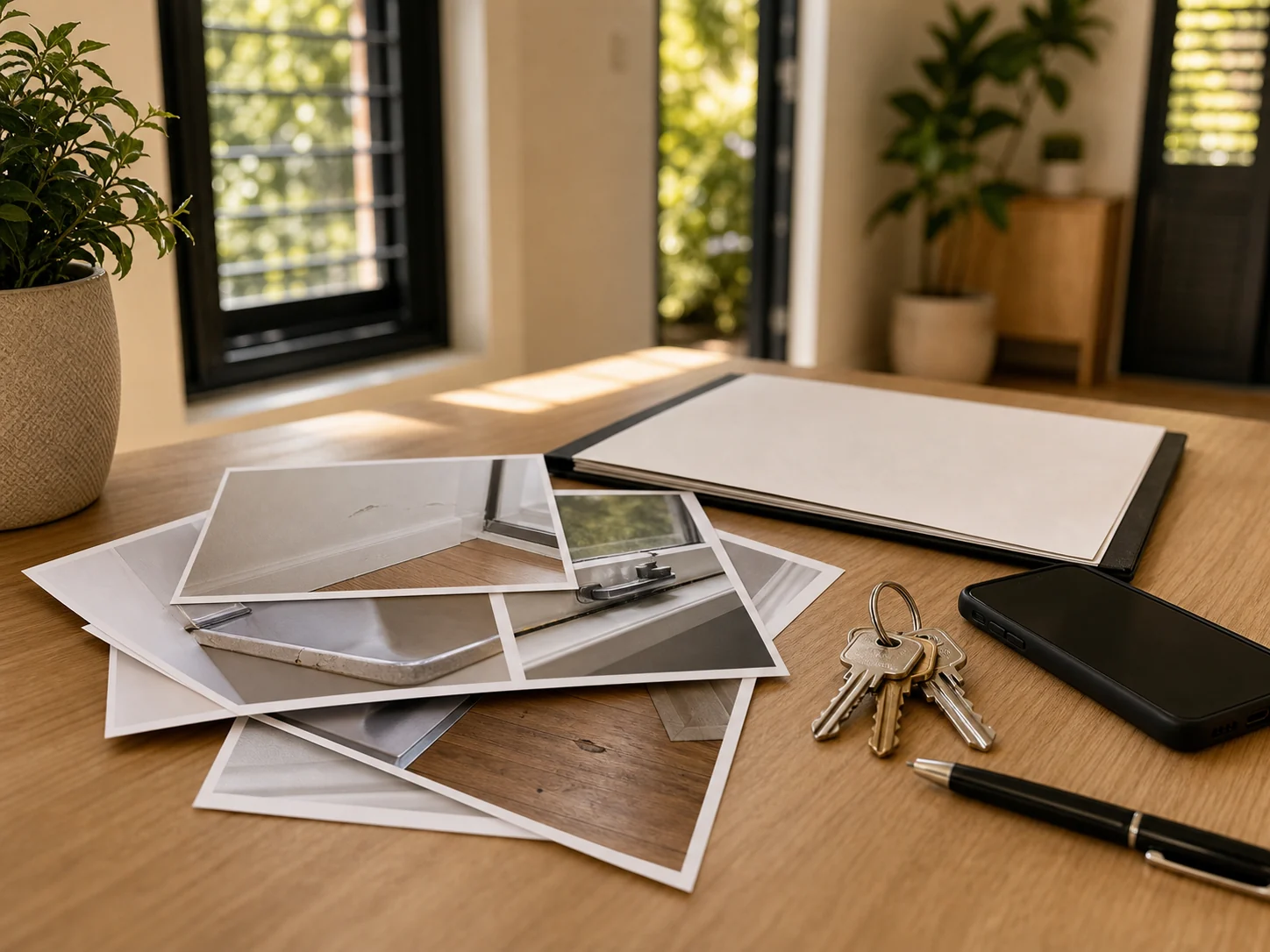
Show the source and the effect
Photograph the possible source: roof area, ceiling, pipe, tap, drain, shower screen, window frame, appliance, balcony, or external wall. Then photograph the effect: stain, wet carpet, swollen cabinetry, bubbling paint, mould, odour, or damaged belongings.
A photo of a brown mark is useful. A photo set showing the mark below a leaking balcony door or ceiling line is better.
Take repeat photos from the same angle
If the issue grows, repeat the same shot daily or after rain. Keep the angle, distance, and label similar. This makes progression obvious without needing long explanation.
Where possible, include a size reference such as a ruler, coin, or piece of tape placed safely near the stain.
Keep reports and repair messages together
Save the first report, all follow-ups, access arrangements, trade attendance, and any outcome. If the repair is delayed, your timeline should show that you reported the issue before the visible damage worsened.
At exit, this helps separate damage caused by a leak from damage caused by tenant use.
Record belongings separately
If your belongings are damaged, photograph them separately from the property condition record. Keep receipts or replacement estimates if relevant. Property damage and personal belongings may follow different processes, so do not mix the evidence into one vague folder.
A clean structure helps everyone understand what you are asking for and what the bond discussion is actually about.
Sources
Article written 2026-06-26